TL;DR: Water damage restoration in Florida typically costs $1,200 to $3,000 for a single-room clean-water leak and $8,000 to $20,000 or more for a whole-floor flood with structural drying. The biggest price drivers are the water category (clean, gray, or sewage-contaminated), how many square feet are affected, and how much material has to be removed versus dried in place. Most homeowners insurance policies cover sudden, accidental losses like a burst pipe, but not flood water or long-term leaks.
If you just found standing water in your kitchen, laundry room, or ground-floor living space and you’re trying to figure out whether this is a $1,500 job or a $15,000 job before anyone shows up, the honest answer is: it depends on what’s wet and for how long. Florida’s slab-on-grade construction means most homes don’t have basements, so water spreads across the ground floor instead of pooling below it, which changes both the damage pattern and the cost. Here’s what actually moves the number in Jacksonville and across the state.
How Much Does Water Damage Restoration Cost in Florida?
Most Florida homeowners pay between $1,200 and $7,500 for a typical residential water damage job, with large losses involving sewage, flooring removal, or multiple rooms running $8,000 to $20,000 or more. The range is wide because restoration pricing is built around square footage, water category, and drying time, not a flat per-job rate.
| Scenario | Typical Cost Range |
|---|---|
| Single-room clean-water leak (appliance line, under 100 sq ft) | $1,200 - $3,000 |
| Carpet and pad removal with multi-day drying, one room | $2,500 - $5,000 |
| Burst pipe affecting 2-3 rooms, 500-1,000 sq ft | $4,500 - $9,000 |
| Category 3 sewage backup cleanup (single bathroom/utility area) | $5,000 - $10,000+ |
| Whole ground-floor flooding on a slab foundation, structural drying | $8,000 - $20,000+ |
| Large-loss flooding with reconstruction (flooring, drywall, cabinetry) | $20,000+ |
These are typical industry ranges for Florida, not a quote. Every loss is different, and American Quality Restoration provides a written scope of work before any restoration begins.
What Factors Change the Price of Water Damage Restoration in FL?
The single biggest cost factor is the water category, because it determines whether materials get dried in place or torn out. Under the ANSI/IICRC S500 standard, Category 1 is clean water from a sanitary source like a supply line, Category 2 is gray water with contamination (a washing machine discharge, a toilet overflow with urine but no feces), and Category 3 is grossly contaminated black water: any sewer or drain backup, a toilet overflow with feces, or storm surge and flood water pushing in from outside.
Category 2 and 3 losses cost more because porous materials like carpet pad, baseboards, and sometimes drywall usually get removed rather than dried, and Category 3 requires antimicrobial treatment and full PPE for the crew. A Category 1 leak caught within a day or two often dries in place with air movers and dehumidifiers alone.
Other factors that move the price: square footage affected, how long the water sat before anyone called for help (mold can start growing in as little as 24 to 48 hours on wet drywall and framing, per the EPA), the materials involved (hardwood and cabinetry cost more to restore than vinyl plank or tile, both common in Jacksonville homes), and Florida’s humidity, which extends drying time compared to drier climates and adds to equipment rental days. Post-storm code upgrades, like elevated electrical or flood-resistant materials in coastal zip codes, can also add cost when a loss triggers a permit.
Does Insurance Cover Water Damage Restoration Costs in Florida?
Most standard homeowners policies cover sudden, accidental water damage, like a pipe that bursts or an appliance hose that fails overnight, but they exclude gradual leaks, wear and tear, and flood water. Coverage specifics vary by insurer and policy, so the written language matters more than general assumptions.
What usually is NOT covered without an endorsement: sewer or drain backups and sump pump failure both require a separate water backup endorsement added to the policy, and flood damage from storm surge, rising rivers, or overflowing groundwater requires a standalone flood policy through the National Flood Insurance Program or a private flood carrier, not a homeowners policy. Given Jacksonville’s flood zones along the St. Johns River and hurricane exposure, a lot of Florida homeowners carry both. Our guide to homeowners insurance and water damage walks through policy language in more detail.
Documentation protects the claim either way. Photograph the damage before anything is moved, keep every receipt, and get a written scope of work from the restoration company, not just a verbal estimate. Homeowners also have a duty to mitigate, meaning the faster the water is stopped and drying starts, the stronger the claim.
What Happens During a Water Damage Restoration Job?
A typical job moves through five phases, and each one is billed separately, which is part of why total cost varies so much.
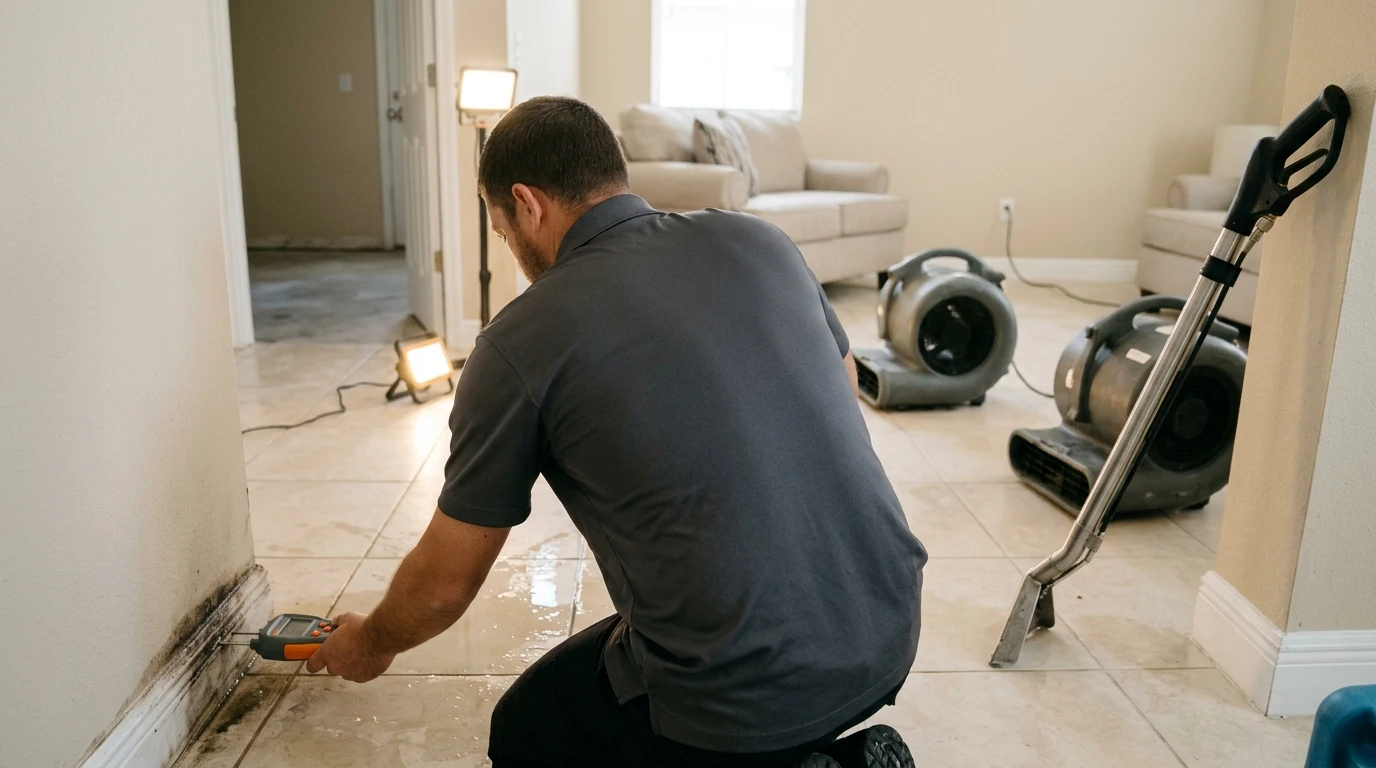
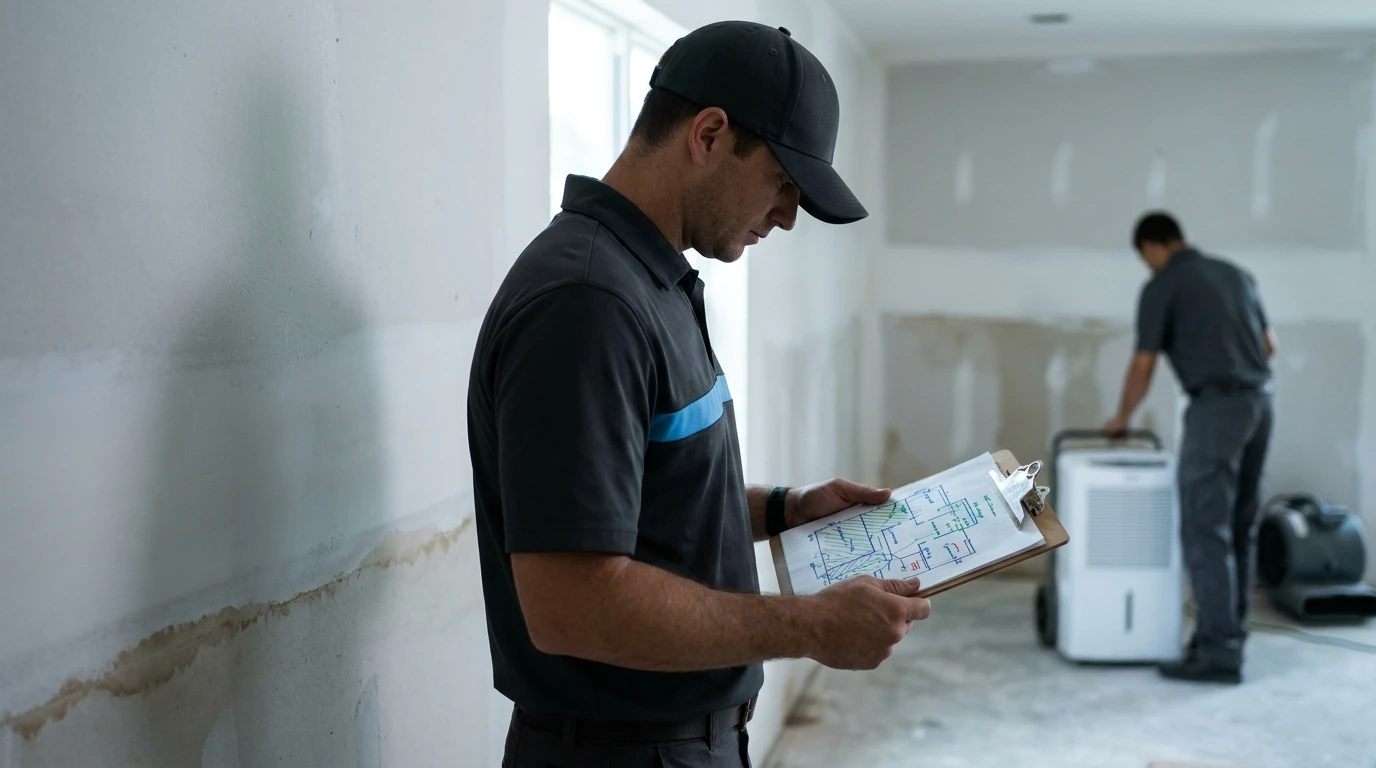
- Emergency call and assessment. A technician inspects the property, identifies the water category, and maps moisture with a meter to find out how far the water traveled, often further than it looks.
- Water extraction. Standing water is pumped or wet-vacuumed out using truck-mounted or portable extraction equipment, usually within the first hour or two on site.
- Drying and monitoring. Air movers and dehumidifiers run for several days, with daily moisture checks to confirm materials are drying to the IICRC S500 standard rather than just feeling dry on the surface. Florida’s ambient humidity typically adds a day or two compared to drier regions.
- Cleaning and antimicrobial treatment. Required for Category 2 and 3 losses, and for any material that stayed wet long enough to risk mold growth.
- Reconstruction. Replacing drywall, flooring, trim, or cabinetry that couldn’t be saved, handled by the contractor of your choice. This phase is priced separately from drying and is where reconstruction-heavy jobs climb past $10,000.
If you’re still in the first hour of a leak, our first-24-hours checklist covers what to do before a crew arrives.
Getting a written scope before work starts is the single best way to avoid surprise costs. Ask what’s included in the drying phase, what triggers material removal, and whether the estimate assumes Category 1 water until a technician confirms otherwise on site.
About American Quality Restoration
American Quality Restoration employs IICRC-certified technicians serving Jacksonville, FL and the surrounding area since 2021 (Florida license MRSR4374). Their crews handle water damage restoration, emergency water cleanup, sewage cleanup, mold remediation, fire and smoke damage restoration, odor removal, storm damage restoration, emergency board-up and tarping, and contents restoration pack-out across Northeast Florida. The company holds IICRC certifications in water restoration (WRT), structural drying (ASD), fire and smoke (FSRT), and mold remediation (AMRT), and maintains a 4.9 Google rating across 78 reviews.
Need help now? Call American Quality Restoration at (904) 438-8780.