TL;DR: After a storm or high wind event in Jacksonville, get a tarp on any roof or window breach within hours, photograph the damage before you touch anything, and call your insurance company and a restoration crew the same day. Wind damage to a roof, siding, or window is usually covered by a standard Florida homeowners policy, but storm surge and rising water need a separate flood policy. Acting fast limits secondary water damage and mold growth inside the home.
If a line of summer thunderstorms, a frontal squall, or the outer bands of a tropical system just peeled shingles off your roof, driven rain through a window, or dropped a limb through your ceiling in Jacksonville, the next few hours matter more than the next few weeks. Wind-driven rain gets behind siding and under roof decking fast, and in the humid Northeast Florida air, wet drywall and insulation can start growing mold within a day or two. What you do before the restoration crew arrives, from Jacksonville Beach to the Southside to Ortega, shapes how much of the structure you keep and how smoothly the insurance claim goes.
What Should You Do First After Wind or Storm Damage?
The first priority after storm or wind damage is to stop further water intrusion and document everything before cleanup starts. That order matters: a mitigated roof is worth more than a photographed one, but an unphotographed one can cost you on the claim.
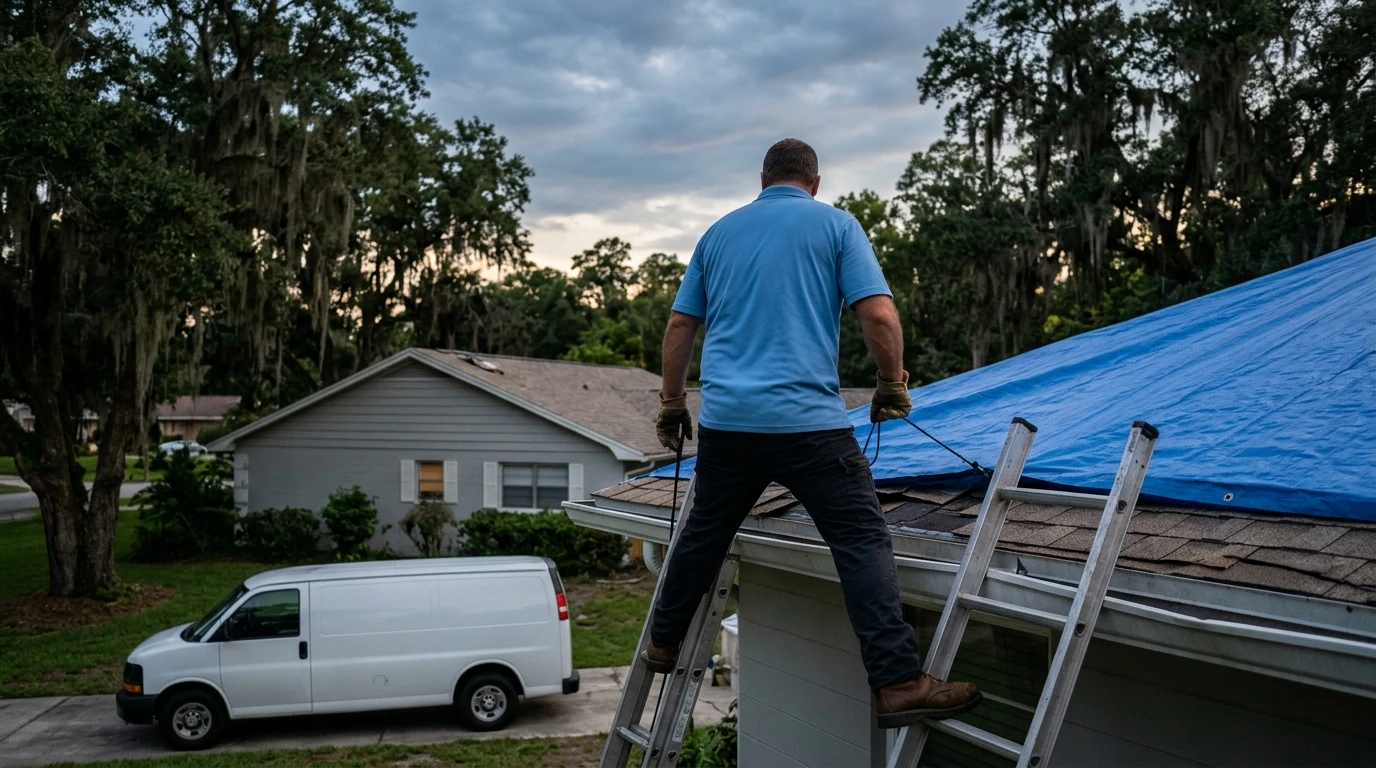
Walk the property for immediate hazards first: downed power lines, a leaning tree, a roof section that looks ready to give way. Stay out of any room with a sagging ceiling. Once it’s safe, take wide and close photos of every damaged area, including the roof, gutters, fencing, and any water stains inside. Then cover the breach, a tarp over an open roof section or plywood over a broken window, to keep rain and wind from doing more damage overnight. If water has already gotten into the living space, shut off power to that circuit before anyone walks through standing water.
Call your insurance company to open the claim the same day if you can, and call a restoration company for emergency board-up or tarping before you call a general contractor. A documented, promptly mitigated loss is easier to defend if the adjuster questions the extent of damage weeks later.
What Does Storm Damage Restoration Actually Involve?
Storm damage restoration is the sequence of stabilizing the structure, drying out anything wet, and coordinating repairs, usually in that order. It is not one job, it is several, often running at the same time.
- Emergency board-up and tarping closes off the breach, whether that’s a missing section of roof, a blown-out window, or a hole from a fallen branch.
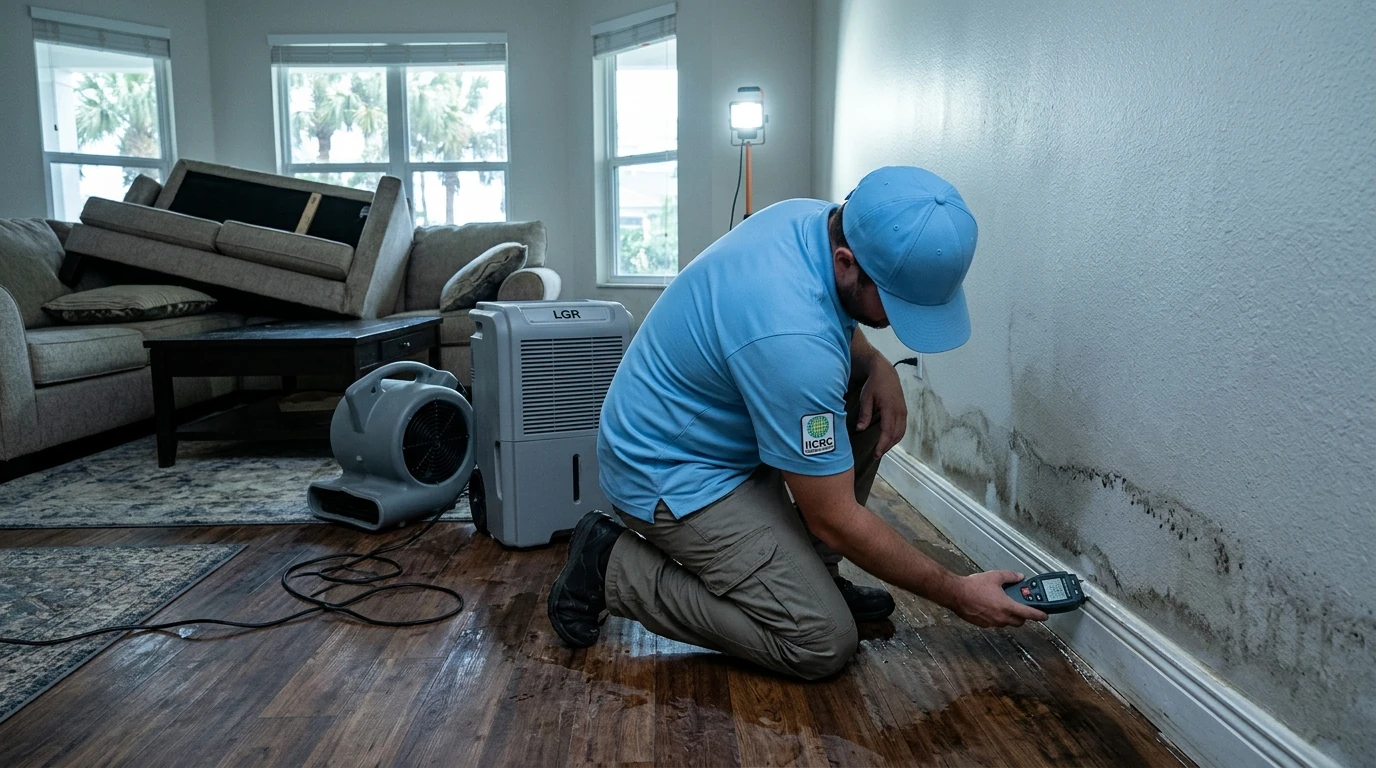
- Water extraction and structural drying follows, pulling standing water and running air movers and dehumidifiers to dry framing, subfloor, and drywall to the moisture targets set by the ANSI/IICRC S500 water damage standard, the industry benchmark for how dry is actually dry.
- Damage assessment documents what’s salvageable versus what needs to come out, drywall, insulation, flooring, and sometimes cabinetry if water sat for more than 24 to 48 hours.
- Contents handling moves damaged belongings out for cleaning or storage if a room needs to be gutted.
- Repairs by your contractor of choice get the structure closed back up, new drywall, roofing, trim, once everything underneath is dry and verified.
For a slower leak that started as roof damage rather than a single storm event, our post on the first 24 hours after water damage covers the drying timeline in more detail.
Will Homeowners Insurance Cover Wind and Storm Damage in Florida?
Most standard Florida homeowners policies cover sudden wind damage, like shingles torn off in a storm or a tree limb through the roof, under the dwelling and other-structures coverage. What they typically don’t cover is flood water, storm surge, or rising groundwater, which needs a separate flood policy through the National Flood Insurance Program or a private flood carrier.
Florida policies also commonly carry a separate hurricane deductible, usually a percentage of the dwelling coverage rather than a flat dollar amount, which only applies when a named storm triggers it. A straight wind event outside a named storm typically falls under your regular deductible instead. Either way, you have a duty to mitigate further damage once the loss happens, and keeping photos, receipts, and a written scope of work protects the claim if the adjuster disputes the extent of repairs; the Insurance Information Institute’s guide to settling claims after a disaster walks through how that documentation process typically works. If you’re unsure whether your policy covers a specific loss, our plain-English guide to water damage coverage breaks down what’s usually in and out of a standard policy.
What Should You Watch for When Hiring a Storm Restoration Crew in Jacksonville?
The biggest risk after a storm isn’t the damage itself, it’s an out-of-state “storm chaser” crew that shows up door-knocking, takes a deposit, and is gone before the job’s inspected. Vet anyone working on your roof or structure the same way you’d vet a surgeon: credentials first, sales pitch second.
Ask for a Florida contractor license number and verify it directly through the Florida DBPR license lookup rather than trusting a truck magnet. Ask whether the crew holds IICRC certifications for water damage and structural drying, not just roofing experience, since most storm losses involve both. Be cautious of any contract that includes an assignment of benefits clause you don’t fully understand, signing over your claim rights to a contractor has caused real headaches for Florida homeowners. Our post on choosing a restoration company covers the specific questions to ask before signing anything.
If a storm just hit your roof, siding, or windows and water is already getting in, the fastest path to limiting the damage is a same-day tarp and a moisture assessment, not a wait-and-see approach. American Quality Restoration handles both the emergency stabilization and the drying work that follows, so the same crew that boards up the breach is the one documenting it for your insurance file.
About American Quality Restoration
American Quality Restoration employs IICRC-certified technicians (WRT, AMRT, FSRT, ASD) serving Jacksonville, FL and the surrounding First Coast since 2021, licensed under MRSR4374. The company’s crews handle storm and wind damage restoration, emergency board-up and tarping, water damage restoration, mold remediation, fire and smoke damage restoration, odor removal, sewage cleanup, and contents pack-out across Jacksonville, Jacksonville Beach, Orange Park, Ponte Vedra Beach, and the surrounding communities, available 24/7 for emergency response. This post was prepared with input from Marshall Schmitz and the American Quality Restoration team.
Need help now? Call American Quality Restoration at (904) 438-8780.